In a country roughly the size of Northern Ireland, Montenegro shelters more than 60 active monasteries and hundreds of churches spanning over a millennium of Christian worship. Some cling to vertical cliff faces. Others sit on artificial islands built stone by stone across centuries. One was dismantled and reassembled three kilometers away to save it from a rising reservoir. Another holds what the faithful believe to be the right hand of John the Baptist.
+Montenegro's sacred heritage is not a footnote to a beach holiday -- it is one of the most compelling reasons to visit the country. The density of monasteries per capita ranks among the highest in Europe, and the quality of medieval frescoes, the drama of the settings, and the living monastic traditions make these sites extraordinary even for secular visitors. Yet the monasteries remain almost entirely unknown outside the Orthodox world. No cruise ship excursion buses line up at Praskvica. You will not find a queue at Piva. Even Ostrog, the most visited pilgrimage site in the Balkans, receives a fraction of the attention given to comparable sites in Greece or Italy.
+This guide covers every major monastery and church worth visiting in Montenegro, with practical details for planning your own pilgrimage circuit -- whether your motivation is spiritual devotion, architectural appreciation, or simply the desire to witness something extraordinary.
+The Great Monasteries
+1. Ostrog Monastery
+Ostrog is Montenegro's most visited site -- not just among monasteries, but among all attractions in the country. Each year, over a million pilgrims and visitors make the journey to this cliff-face sanctuary, built into an almost vertical rock wall at 900 meters altitude in the mountains above Danilovgrad. The monastery is a place of active devotion: pilgrims sleep on the stone terrace outside the cave churches, waiting for dawn liturgy, and many believe the relics of St. Basil of Ostrog possess healing power.
History
+The monastery was founded in the 17th century by Vasilije Jovanovic, the Bishop of Herzegovina, who later became venerated as St. Basil of Ostrog (Sveti Vasilije Ostroski). Fleeing Ottoman persecution, he retreated to the caves high in this cliff face and established a monastic community. He died here in 1671, and his body was found to be incorrupt -- a phenomenon that cemented his sainthood in Orthodox tradition.
The complex is divided into two sections. The Lower Monastery, built in the 19th century, contains the Church of the Holy Trinity and accommodation for pilgrims. The Upper Monastery, the original cave complex 3 kilometers further up a narrow, winding road, contains two small cave churches: the Church of the Presentation and the Church of the Holy Cross. The frescoes in the Church of the Holy Cross were painted by the master Radul in the 17th century and are considered among the finest examples of Serbian Orthodox art from the period.
+Visiting Practicalities
+- +
- Entry: Free. Donations appreciated but never solicited. +
- Hours: Daily, approximately 6:00 AM to 5:00 PM (extended hours in summer, particularly around feast days). +
- Dress code: Covered shoulders and knees for both men and women. Women may borrow shawls at the entrance. Remove hats before entering churches. +
- Overnight stays: Pilgrim quarters are available at the Lower Monastery on a donation basis. Expect basic dormitory-style accommodation. Reservations not required; arrive by early afternoon in summer to secure a space. +
- Getting there: 30 km from Podgorica (approximately 1 hour by car). The road from the main highway to the Lower Monastery is paved and straightforward. The road from the Lower to the Upper Monastery is narrow, steep, and winding (3 km), with one-way traffic managed by monastery staff during busy periods. Organized tours run daily from Podgorica, Budva, and Kotor (EUR 25-40). +
- Parking: Available at both the Lower and Upper Monasteries. The Upper Monastery car park is small and fills quickly on weekends and feast days. Shuttle buses run between the two levels. +
Pro tip: Visit on a weekday morning to avoid crowds. On Orthodox feast days (particularly St. Basil's Day, May 12) and summer weekends, the road to the Upper Monastery can have waits of 1-2 hours.
+2. Cetinje Monastery
+The Cetinje Monastery holds relics of extraordinary significance to Christianity as a whole: what is venerated as the right hand of John the Baptist (the hand that baptized Jesus Christ) and a fragment of the True Cross. These relics, along with an icon of the Virgin Mary attributed to St. Luke the Evangelist, make this modest monastery one of the most important Orthodox sites in the world.
+History
+Founded in 1484 by Ivan Crnojevic, the lord of Zeta (medieval Montenegro), the monastery was intended as the seat of the Montenegrin bishopric. It has been destroyed and rebuilt multiple times -- most significantly after Ottoman attacks in the 16th century and again in 1785, when it was rebuilt to its current form by Metropolitan Petar I Petrovic-Njegos.
+The relics of John the Baptist's hand have a remarkable provenance. According to tradition, the hand was taken from Jerusalem to Constantinople, then to the Knights Hospitallers on Rhodes, then to Malta, then to Russia (where it was held by the Romanov dynasty), and finally brought to Montenegro. The Treasury also contains the crown of Serbian King Stefan Decanski and numerous medieval manuscripts.
+Visiting Practicalities
+- +
- Entry: Free. The Treasury room, where the relics are displayed, is open during visiting hours and a monk will typically provide a brief explanation. +
- Hours: Daily, approximately 8:00 AM to 5:00 PM. May be closed during liturgical services. +
- Location: Central Cetinje, the old royal capital of Montenegro. Easily walkable from all points in the small town. +
- Getting there: Cetinje is 36 km from Podgorica (40 minutes) and 30 km from Budva (45 minutes via the Lovcen road, a spectacular serpentine drive). +
- Combined visit: Pair with the Njegos Mausoleum on Mount Lovcen (20 km from Cetinje), the National Museum of Montenegro, and the Biljarda (the secular palace) -- all within walking distance. +
3. Moraca Monastery
+Set in the lush Moraca Canyon where the monastery's beekeeping monks tend hives among the wildflowers, Moraca is one of the most beautiful and serene monastic complexes in the Balkans. Founded in 1252 by Stefan, the son of King Vukan Nemanjic, it represents a high point of medieval Serbian religious architecture.
The Frescoes
+Moraca's frescoes are its glory. The oldest, dating to the 13th century (contemporary with the monastery's founding), depict scenes from the life of the Prophet Elijah and are considered among the finest examples of medieval art in the entire region. A later cycle from the 16th-17th century covers the remaining walls and includes vividly expressive scenes of saints and biblical narratives. The fresco cycle is remarkably complete -- unusual for a monastery that has endured centuries of conflict.
+Visiting Practicalities
+- +
- Entry: Free. Small gift shop sells candles, icons, and the monks' honey (EUR 5-10 per jar -- excellent quality and a perfect souvenir). +
- Hours: Daily during daylight hours. +
- Location: On the main Podgorica-Kolasin highway (E65), 68 km north of Podgorica. The monastery is visible from the road and has a signed turnoff. +
- Getting there: A natural stop on any road trip between the coast and the northern mountains. If driving from Podgorica to Zabljak or Kolasin, you will pass directly by. +
- Setting: The riverside location is idyllic. Picnic areas near the monastery, and the Moraca River is a vivid turquoise. Allow at least an hour to soak in the atmosphere. +
4. Piva Monastery
+The story of Piva Monastery is one of the most remarkable in European heritage preservation. When the Piva River was dammed in the 1970s to create the Pivsko Jezero (Piva Lake) hydroelectric reservoir, the 16th-century monastery lay directly in the flood zone. Rather than let it drown, Yugoslav authorities undertook an extraordinary operation: the entire monastery -- every stone, every fresco, every beam -- was disassembled, catalogued, transported 3 kilometers, and reassembled at a higher elevation overlooking the new lake.
+History
+Originally built between 1573 and 1586 by Metropolitan Savatije during the Ottoman period, Piva was conceived as a secret repository for Orthodox culture at a time when new church construction was forbidden by the Ottoman authorities. The builders disguised the project and worked under constant threat. The result was a fortified monastery with thick walls and a deliberately modest exterior concealing an interior of extraordinary richness.
+The fresco cycle, painted in the late 16th and early 17th centuries, is extensive and remarkably well-preserved (the careful relocation process ensured their survival). The treasury holds one of the finest collections of medieval manuscripts in Montenegro, along with liturgical objects dating to the 14th century.
+Visiting Practicalities
+- +
- Entry: Free. +
- Hours: Daily during daylight hours. Ring the bell if the gate appears closed -- a monk will typically open it. +
- Location: Near Pluzine, overlooking Piva Lake. Remote but rewarding. +
- Getting there: 170 km from Podgorica (approximately 3 hours). The road follows the spectacular Piva Canyon. Accessible from Zabljak (70 km, 1.5 hours) or from the Bosnian border at Scepan Polje. +
- Combined visit: Piva Lake itself is stunning -- deep turquoise water surrounded by 1,000-meter cliffs. Boat trips are available from Pluzine. +
5. Savina Monastery
+Perched among Mediterranean cypresses and gardens above the Bay of Kotor near Herceg Novi, Savina Monastery has overlooked the Adriatic since at least the 11th century. The complex includes three churches spanning different centuries and architectural styles, creating a layered record of Montenegrin religious architecture.
History
+The oldest structure, the Small Church of the Assumption, dates to the 11th century (some sources cite 1030) and is a small, intimate space with fragments of medieval frescoes. The Large Church of the Assumption, built in the 18th century, is a Baroque masterpiece with an impressive iconostasis and a treasury of icons dating to the 14th century. The third church, dedicated to St. Sava, dates to the 14th century.
+The monastery's icon collection is particularly significant, including works attributed to the Cretan-Venetian school. The setting, in gardens filled with Mediterranean flora with views across the bay, makes Savina one of the most photogenic monasteries in Montenegro.
+Visiting Practicalities
+- +
- Entry: Free. Treasury viewable on request (small donation appreciated). +
- Hours: Daily during daylight hours. +
- Location: 2 km from Herceg Novi center, walkable via a pleasant coastal path or a short taxi ride. +
- Getting there: Herceg Novi is the first/last major town on Montenegro's coast when approaching from Dubrovnik (40 km, approximately 1 hour including the border crossing). +
6. Djurdjevi Stupovi (Pillars of St. George)
+Near the northern town of Berane, the 12th-century monastery of Djurdjevi Stupovi stands as a testament to medieval Serbian spiritual culture. Built around 1213 by Stefan Nemanjic (the first crowned Serbian king's brother), the monastery takes its name from the two towers (stupovi, "pillars") that once flanked the entrance church.
+What to See
+Though partially ruined, the remaining structures contain remarkable frescoes from the 13th century. The remote setting, in rolling hills above Berane, lends the site an atmospheric quality that more restored monasteries sometimes lack. The sense of encountering something genuinely ancient and undisturbed is powerful here.
+Visiting Practicalities
+- +
- Entry: Free. +
- Hours: Accessible during daylight hours. +
- Location: 3 km from Berane, in northeastern Montenegro. +
- Getting there: Berane is 160 km from Podgorica (approximately 2.5 hours). The monastery is well signed from the town. +
- Note: This is an off-the-beaten-path site. You may be the only visitor. +
7. Praskvica Monastery
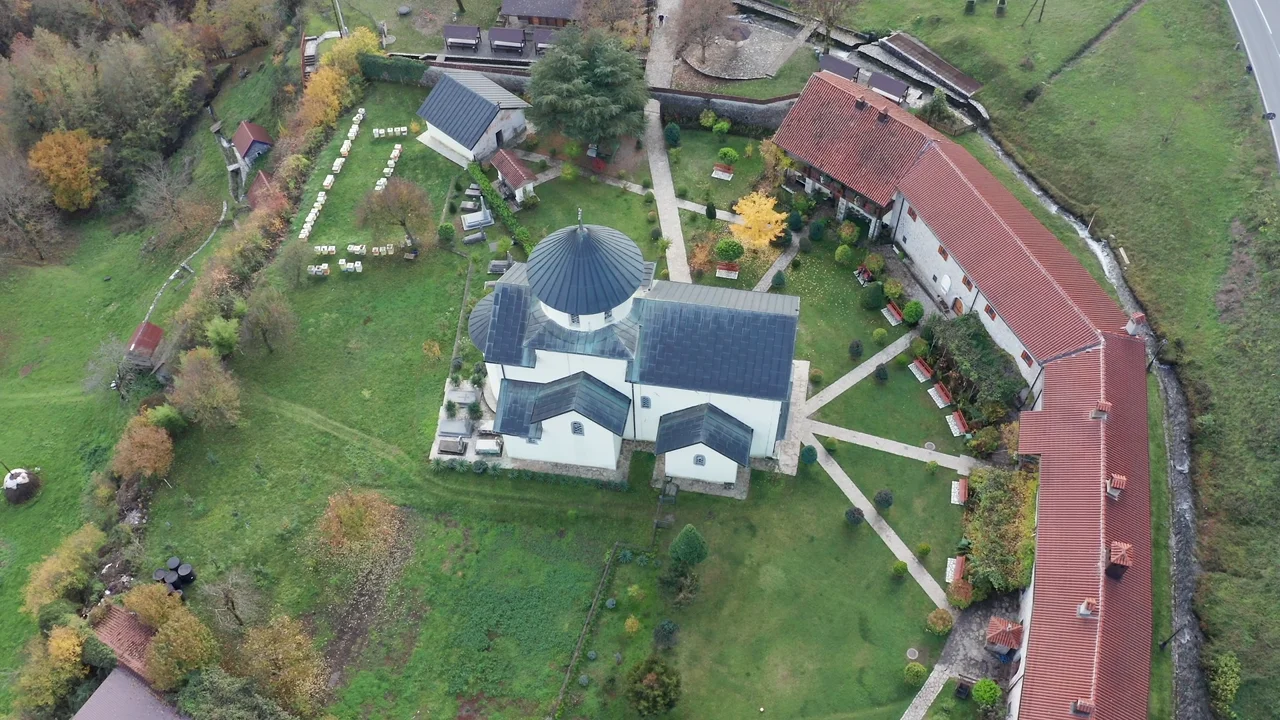
+Hidden in olive groves on the steep hillside between Sveti Stefan and Milocer, Praskvica is one of Montenegro's most enchanting and least-visited monasteries. Its name derives from the Serbian word for peach (praskva) -- a spring near the monastery reportedly once had a peach-like fragrance.
History
+Founded around 1050, Praskvica has been continuously inhabited for nearly a thousand years. The monastery played a significant role in Montenegrin resistance to Ottoman rule, and its library contains documents relating to the Napoleonic wars and the Congress of Vienna. The small Treasury room (EUR 2 entry) holds icons, manuscripts, and ecclesiastical objects of considerable historical value.
+Visiting Practicalities
+- +
- Entry: Grounds free. Treasury EUR 2. +
- Hours: Daily during daylight hours. +
- Location: Above the coastal road between Sveti Stefan and Milocer. Signed path from the road (10-minute uphill walk). +
- Getting there: 8 km south of Budva on the Adriatic highway. +
- Atmosphere: Quiet, rarely visited by tourists. The sound of cicadas and the scent of olive trees. One of Montenegro's hidden gems. +
8. Podmaine Monastery (Monastery of the Nativity of the Blessed Virgin)
+Just north of Budva's bustling tourist zone, the Podmaine Monastery offers a contemplative counterpoint to the beach scene below. Originally built in the 15th century, the monastery was damaged during various conflicts and underwent extensive reconstruction in the early 2000s.
+Visiting Practicalities
+- +
- Entry: Free. +
- Hours: Daily during daylight hours. +
- Location: 2 km north of Budva Old Town. +
- Getting there: A pleasant walk from Budva through pine-shaded paths, or a 5-minute taxi ride. +
Notable Churches
+St. Tryphon Cathedral, Kotor
+The Cathedral of St. Tryphon (Katedrala Svetog Tripuna) is Kotor's defining monument and one of the finest Romanesque churches on the Adriatic. Built in 1166 on the site of a 9th-century church, the cathedral houses the relics of St. Tryphon, the patron saint of Kotor, in a silver-gilt reliquary in the upper chapel.
+The interior features notable 14th-century frescoes (partially preserved), a Romanesque stone baldachin over the main altar, and a treasury of medieval gold and silverwork. The twin bell towers (rebuilt after the 1667 earthquake, which accounts for their slightly different heights) are the most recognizable feature of the Kotor skyline.
+- +
- Entry: EUR 3. +
- Hours: Daily 8:00 AM - 7:00 PM (summer), reduced hours in winter. +
Our Lady of the Rocks, Perast
+One of Montenegro's most iconic sites, the Church of Our Lady of the Rocks (Gospa od Skrpjela) sits on a tiny artificial island in the Bay of Kotor opposite Perast. According to tradition, the island was created over centuries by sailors who threw stones into the bay upon each safe return from a voyage. By the 17th century, the island was large enough for a church.
Inside, 68 paintings by the 17th-century Perast artist Tripo Kokolja cover the walls and ceiling, along with approximately 2,500 votive silver tablets left by sailors' families -- a remarkable folk-art collection depicting ships, storms, and prayers for safe return.
+- +
- Entry: Included in water taxi price. +
- Water taxi: EUR 5 return from Perast waterfront (5-minute crossing, boats depart constantly). +
- Hours: Daily 9:00 AM - 7:00 PM (summer), reduced hours off-season. +
Church of St. Luke, Kotor
+Tucked into a small square in Kotor's Old Town, the Church of St. Luke (1195) possesses a unique distinction: it contains both a Catholic and an Orthodox altar, a physical testament to centuries of shared worship between the two communities. From 1657 to 1812, both Catholic and Orthodox services were held simultaneously in this small space -- a remarkable ecumenical arrangement.
+- +
- Entry: Free. +
- Hours: Variable. Often open during the day; check at the tourist office. +
Vlaska Church (Court Church of the Cipur), Cetinje
+This church, also known as the Court Church, has a remarkable construction detail: its fence was reportedly built from Ottoman weapons captured during Montenegrin battles. The church sits in Cetinje near the royal palace and serves as the burial place of several Montenegrin rulers.
+- +
- Entry: Free. +
- Hours: Daily during daylight hours. +
A Five-Day Monastery Circuit
+For travelers who wish to experience the full breadth of Montenegro's monastic heritage, the following five-day driving circuit covers the major sites with manageable daily distances.
+Day 1: The Coast (Savina and Praskvica)
+Start in Herceg Novi. Morning visit to Savina Monastery (1 hour). Drive south along the coast (stopping for lunch in Kotor Old Town and a visit to St. Tryphon Cathedral and the Church of St. Luke). Afternoon visit to Praskvica Monastery above Sveti Stefan. Overnight in Budva or Sveti Stefan.
+Driving: approximately 80 km.
+Day 2: Cetinje and Lovcen
+Drive to Cetinje via the serpentine Lovcen road from the coast (one of Europe's most spectacular drives, 25 hairpin bends). Visit Cetinje Monastery and view the relics of John the Baptist. Visit the Vlaska Church and Cetinje's museums. Afternoon drive up Mount Lovcen to the Njegos Mausoleum (not a monastery but a magnificent sacred site -- 461 steps to the summit chapel with panoramic views of Montenegro). Overnight in Cetinje or drive to Podgorica.
+Driving: approximately 60 km.
+Day 3: Ostrog
+Full morning at Ostrog Monastery -- arrive early (by 8:00 AM) to beat the crowds. Visit the Lower Monastery and then drive or walk up to the Upper Monastery. Allow 2-3 hours for a thorough visit including the cave churches. Afternoon drive toward the north, stopping at Moraca Monastery en route. Overnight in Kolasin.
+Driving: approximately 120 km.
+Day 4: Northeast Monasteries
+Drive to Berane for Djurdjevi Stupovi. This is the remotest day of the circuit, passing through Montenegro's dramatic northeastern landscape of gorges and high plateaus. The driving itself is part of the experience. Overnight in Zabljak or drive to Pluzine.
+Driving: approximately 180 km.
+Day 5: Piva Monastery
+Visit Piva Monastery near Pluzine, learning its extraordinary relocation story. Explore the lakeside setting. Return south toward the coast via the Piva Canyon road or continue to Zabljak for a visit to Durmitor National Park.
+Driving: approximately 160 km (to coast) or 70 km (to Zabljak).
+Total circuit: approximately 600 km over 5 days.
+Visiting Etiquette and Practical Guidance
+Dress Code
+All monasteries and most churches in Montenegro enforce modest dress requirements:
+- +
- Shoulders must be covered (no tank tops or sleeveless shirts for either gender). +
- Knees must be covered (no shorts or short skirts). +
- Women: Some monasteries traditionally request that women wear skirts rather than trousers, though this is increasingly flexible. Shawls and wrap-around skirts are often available to borrow at the entrance of major monasteries like Ostrog. +
- Men: Remove hats before entering any church. +
- Footwear: Shoes required (no bare feet). +
Photography
+- +
- Exterior photography is almost always permitted and welcomed. +
- Interior photography without flash is permitted in most monasteries, but always ask first. A monk or sign will indicate if photography is restricted. +
- Never use flash near frescoes or icons. The UV light damages centuries-old pigments. +
- Tripods are generally not permitted inside churches. +
Religious Observance
+- +
- Silence and reverence are expected inside all churches and monastery grounds. +
- Icon veneration: If you see pilgrims kissing icons, this is standard Orthodox practice. You are not expected to participate, but do not block access to venerated icons. +
- Candle lighting: You may purchase and light candles (typically EUR 0.50-1.00) as a gesture of respect. Candles for the living go on the right-side candle stand; candles for the deceased go on the left. +
- Liturgical services: If you visit during a service (typically morning liturgy, 8:00-10:00 AM), you are welcome to observe from the back. Stand quietly (there are typically no pews in Orthodox churches -- worshippers stand throughout the service). Do not walk around or take photographs during active worship. +
Donations and Purchases
+Monasteries do not charge entry fees, but they rely on donations and sales to sustain their communities. Most monastery gift shops sell:
+- +
- Candles (EUR 0.50-1.00) +
- Icons (reproductions, EUR 5-30; hand-painted, EUR 50-200+) +
- Honey produced by the monks (EUR 5-15 per jar -- particularly good at Moraca) +
- Rakija (fruit brandy distilled at the monastery, EUR 5-10 per bottle) +
- Religious books and postcards +
A small donation (EUR 2-5) left in the donation box is always appreciated.
+The Orthodox Calendar in Montenegro
+Understanding the Orthodox calendar enriches any visit to Montenegro's monasteries and adds the possibility of witnessing living traditions that stretch back centuries.
+Key Dates
+- +
- Orthodox Christmas: January 7 (January 6 is Christmas Eve, with the traditional burning of the badnjak, or yule log). Monasteries hold midnight liturgies that are profoundly atmospheric. +
- Orthodox Easter (Pascha): Date varies (calculated differently from Western Easter, usually April). The most important date in the Orthodox year. Easter midnight liturgies feature candlelit processions around the church. +
- Slava (Patron Saint Day): Every Serbian and Montenegrin family celebrates the feast day of their patron saint. This is a uniquely Serbian Orthodox tradition and a UNESCO-recognized intangible cultural heritage. If you are invited to a family's Slava, accept -- it is a significant honor. +
- St. Basil's Day (May 12): The feast of St. Basil of Ostrog. The largest pilgrimage day at Ostrog Monastery -- tens of thousands attend. Expect very large crowds and limited road access. +
- Assumption of the Virgin Mary (August 28): Major celebration at churches and monasteries dedicated to the Assumption (including Savina). +
Visiting During Liturgy
+Morning liturgy (typically 8:00-10:00 AM on Sundays and feast days) offers the most atmospheric monastery experience. The chanting, incense, and candlelight in these ancient spaces create an experience that transcends religious affiliation. However, visiting during liturgy requires extra sensitivity: remain at the back, do not photograph, and do not enter or exit during the most sacred parts of the service.
Frequently Asked Questions
+Do I need to be Orthodox (or religious at all) to visit monasteries in Montenegro?
+Not at all. Montenegro's monasteries welcome visitors of all faiths and none. Monks are typically happy to share the history and significance of their monastery with interested visitors. The only requirements are modest dress and respectful behavior. Many visitors are drawn by the art, architecture, and history rather than religious devotion, and this is perfectly understood and welcomed.
+Are the monasteries accessible for people with limited mobility?
+Accessibility varies significantly. Ostrog's Upper Monastery involves a steep 3 km road and some stairs, making it challenging for those with limited mobility (the Lower Monastery is more accessible). Cetinje Monastery is on flat ground in the town center and is fully accessible. Moraca is mostly flat. Praskvica requires a 10-minute uphill walk from the road. Piva is accessible by car with minimal walking. None of the historic monastery churches have been retrofitted with ramps or elevators.
+How much time should I allow for each monastery visit?
+For a thorough visit with time to absorb the atmosphere: Ostrog requires 2-3 hours (including the drive between Lower and Upper Monasteries). Cetinje Monastery needs 45 minutes to 1 hour. Moraca is ideal at 1-1.5 hours (including time by the river). Piva and Savina each merit 1 hour. Praskvica is a 30-45 minute visit. Budget extra time if you plan to attend a service or have a conversation with a monk.
+Can I stay overnight at monasteries?
+Yes, several monasteries offer pilgrim accommodation. Ostrog is the most well-known for overnight stays, with dormitory-style rooms available on a donation basis. Moraca and other larger monasteries may also accommodate pilgrims, though facilities are basic (shared rooms, simple bedding, communal meals). Contact the monastery in advance if possible, though walk-in pilgrims are rarely turned away. Overnight stays offer the extraordinary experience of hearing vespers echo through empty corridors and attending dawn liturgy before the day-trippers arrive.
+Is it appropriate to bring children to monasteries?
+Children are welcome. Montenegrin families regularly bring children of all ages to monasteries, and monks are typically warm and patient with young visitors. However, children should be supervised to maintain quiet inside churches, and the practical considerations of steep roads (Ostrog) or long walks (Praskvica) should be factored in. The icon painting and vivid fresco stories often fascinate older children.
+What is the best time of year to visit the monasteries?
+Each season has its merits. Spring (April-May) offers wildflowers and mild temperatures. Summer (June-August) has the longest opening hours and the most reliable access to mountain monasteries, but also the largest crowds (especially at Ostrog). Autumn (September-October) brings golden light and few visitors. Winter visits to coastal monasteries (Savina, Praskvica) are perfectly feasible, and the quiet atmosphere is deeply contemplative. Mountain monasteries (Moraca, Piva) may be harder to reach in winter due to snow.
+Where to Stay
+For the coastal monasteries (Savina, Praskvica, Podmaine): Base in Herceg Novi (for Savina) or Budva/Sveti Stefan (for Praskvica and Podmaine). Mid-range accommodation EUR 40-80 per night.
+For Cetinje Monastery: Cetinje has limited but characterful accommodation (EUR 30-60 per night). Alternatively, base in Podgorica (36 km, wider hotel selection, EUR 40-100 per night) or on the coast and visit as a day trip.
+For Ostrog: Day-trip from Podgorica (1 hour) or the coast (2 hours). Pilgrim accommodation at the monastery itself (donation-based). Hotels in Danilovgrad (15 km from the monastery turnoff, EUR 30-50 per night).
+For Moraca: Day-trip stop on the Podgorica-Kolasin highway. If overnighting nearby, Kolasin offers mountain hotels and guesthouses (EUR 35-70 per night) and is also a base for skiing and hiking.
+For Piva: Pluzine has a handful of guesthouses (EUR 25-45 per night) overlooking the lake. Alternatively, base in Zabljak (70 km, the gateway to Durmitor) where accommodation is more plentiful (EUR 30-80 per night).
+For the full five-day circuit: Book accommodation in Budva/Herceg Novi (Night 1), Cetinje/Podgorica (Night 2), Kolasin (Night 3), Zabljak/Pluzine (Night 4), and your departure point (Night 5).
+References
+- +
- Serbian Orthodox Church, Metropolitanate of Montenegro and the Littoral. Official monastery information and liturgical calendars. mitropolija.com. +
- UNESCO World Heritage Centre. "Natural and Culturo-Historical Region of Kotor." whc.unesco.org/en/list/125. +
- UNESCO Intangible Cultural Heritage. "Slava, celebration of family saint patron's day." ich.unesco.org. +
- Montenegro National Tourism Organisation. "Religious Heritage." montenegro.travel/en/what-to-do/culture/religious-heritage. +
- Cirkovic, Sima. The Serbs. Wiley-Blackwell, 2004. Chapter on medieval Montenegrin monasteries and church architecture. +
- Stevovic, Ivan. "Medieval Art in Montenegro: Frescoes of Moraca and the Serbian Tradition." Zograf, No. 35, 2011. +
- Ostrog Monastery official website. manastir-ostrog.com. +
- Kotor Tourist Organisation. "St. Tryphon Cathedral." kotor.travel. +
- Perast Museum. "Our Lady of the Rocks: History and Collection." muzejperast.me. +
- Lonely Planet. "Montenegro: Monasteries and Churches." lonelyplanet.com/montenegro. +


