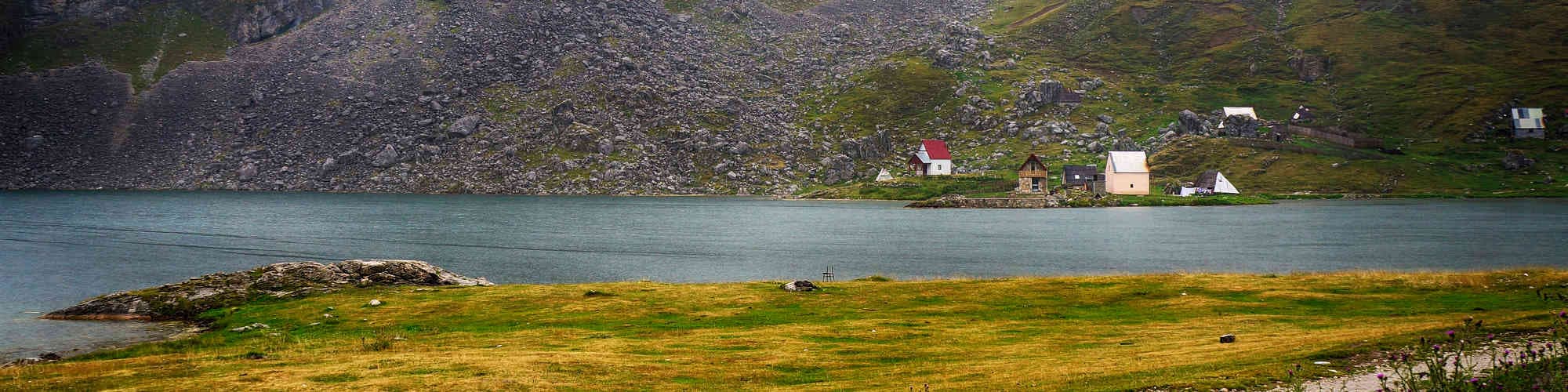
Tucked away at 954 metres above sea level, where the Bjelasica and Sinjajevina mountain ranges converge in a sweeping amphitheatre of forested peaks and alpine meadows, Kolašin is the kind of place that makes you wonder why the whole world hasn't discovered it yet. This compact mountain town in central Montenegro has been quietly transforming from a sleepy highland settlement into one of the Balkans' most exciting year-round destinations, offering world-class skiing in winter, pristine national park wilderness in summer, and some of the most honest, hearty mountain cuisine you will find anywhere in Europe.
What sets Kolašin apart from better-known alpine resorts is its sense of untouched authenticity. There are no sprawling commercial strips or overpriced tourist traps here. Instead, you will find a genuine mountain community where shepherds still move their flocks to highland pastures each spring, where grandmothers stir enormous pots of kačamak over open fires, and where one of the last primeval forests on the continent stands just twenty minutes down the road. Whether you come for the fresh powder, the hiking trails, or simply to breathe some of the cleanest air in Europe, Kolašin delivers something that is becoming increasingly rare in modern travel: an experience that feels real.
Table of Contents
- About Kolašin
- Skiing in Kolašin
- Biogradska Gora National Park
- Morača Canyon and Monastery
- Summer Activities
- Local Cuisine
- Where to Eat
- Where to Stay
- Day Trips from Kolašin
- Getting There
- Practical Tips
About Kolašin {#about-kolasin}
Kolašin sits at the geographic heart of Montenegro, occupying a broad valley where the Svinjača River meets the western slopes of the Bjelasica massif. At just under 1,000 metres elevation, the town enjoys a distinctly alpine climate -- cool summers that rarely push above 25 degrees Celsius and cold, snowy winters that blanket the surrounding mountains from December through March.
The town itself is small enough to walk across in fifteen minutes, centred on a main street lined with cafes, a handful of shops, and an increasingly polished collection of hotels. The population hovers around 3,000 in the town proper, though the wider municipality encompasses numerous villages scattered across the surrounding highlands. Despite its modest size, Kolašin punches well above its weight as a tourism destination, serving as the gateway to Biogradska Gora National Park, two modern ski resorts, and some of the most spectacular mountain terrain in the western Balkans.
In recent years, significant investment has flowed into Kolašin. The construction of the Kolašin 1600 ski resort, the arrival of international hotel brands, and the development of the Kolasin Valleys resort complex have signalled a new chapter for this mountain town. Yet the pace of change remains measured enough that the town has not lost its character. The old-timers still gather for coffee in the square each morning, and the surrounding mountains remain as wild and untrammelled as ever.
Historically, Kolašin has always been a crossroads. It sits on the ancient route connecting the Montenegrin coast to the Serbian interior, and the town has changed hands numerous times over the centuries -- between Ottoman, Montenegrin, and Austro-Hungarian control. That layered history is visible in the town's modest but interesting architecture, and in the resilient, hospitable character of its people.
Skiing in Kolašin {#skiing-in-kolasin}
Kolašin's skiing story is one of dramatic recent transformation. Where once there was a single, modest resort with a handful of aging lifts, there are now two distinct ski areas offering a combined 45 kilometres of marked pistes, modern lift infrastructure, and terrain suitable for everyone from first-time beginners to confident off-piste skiers.
Kolašin 1450
The original ski area, Kolašin 1450, occupies the forested northern slopes of Bjelasica above the town. Its base station sits at 1,450 metres, with runs climbing through dense spruce and pine forests to around 1,800 metres. The skiing here has a particular charm that comes from those tree-lined runs -- on a snowy day, gliding through the silent forest with powder spraying off the branches above you is genuinely magical.
Kolašin 1450 is well suited to intermediate skiers and families. The runs are mostly blue and red graded, with natural undulations and enough variety to keep things interesting for a few days. The forest cover also means the slopes hold their snow well and remain skiable even when higher, exposed terrain is closed due to wind. Facilities at the base include equipment rental shops, a ski school, and several cafes where you can warm up with a rakija between runs.
Kolašin 1600
The newer Kolašin 1600 resort represents a quantum leap for skiing in Montenegro. Officially opening its first lifts in 2019 and undergoing continued expansion since, this resort sits on the higher, more exposed slopes of Bjelasica, with its base at 1,574 metres and runs reaching the summit of Troglava peak at 2,035 metres.
The centrepiece of Kolašin 1600 is the K8 gondola, a modern six-seater system capable of transporting 2,600 skiers per hour. The gondola whisks you from the base area to the upper mountain in minutes, opening up a network of wide, above-treeline runs with panoramic views that stretch across multiple mountain ranges. On a clear day, the vista from Troglava is extraordinary -- you can see the jagged spine of Durmitor to the northwest, the rolling uplands of Sinjajevina to the west, and the forested bulk of Bjelasica spreading out beneath you.
The terrain at 1600 is more varied and more challenging than at 1450. There are genuine red runs with sustained pitch, open bowls for confident skiers, and off-piste opportunities in the gullies and ridgelines above the marked runs. The resort also caters well to beginners, with dedicated learning areas at the base.
Practical Ski Information
The ski season typically runs from mid-December through to late March, though snow conditions vary year to year. January and February offer the most reliable coverage. One of Kolašin's great selling points is value -- a daily ski pass costs just 25 euros for adults in the current season, making it officially one of the cheapest ski destinations in Europe. Equipment rental is available at both resorts at similarly reasonable prices.
Plans are underway to link the two resorts more seamlessly and expand the combined skiable area further. A combined ski pass covering Kolašin, Kopaonik in Serbia, and Jahorina in Bosnia has also been introduced, making it possible to explore multiple Balkan ski areas on a single ticket.
Biogradska Gora National Park {#biogradska-gora-national-park}
If Kolašin's ski resorts represent its future, Biogradska Gora National Park represents something far older -- a window into what much of Europe looked like before humans reshaped the landscape. Located just 20 minutes northeast of town, this 54-square-kilometre national park contains one of the last three primeval forests remaining on the European continent, and stepping into it is like stepping back several thousand years.
The Primeval Forest
The heart of the park is a 16-square-kilometre virgin forest that has never been logged or significantly altered by human activity. Walking through it is an almost overwhelming sensory experience. Enormous beech, fir, and spruce trees -- many over 500 years old -- soar to heights of 45 metres, their canopy so dense that the forest floor exists in a permanent green twilight. Fallen trunks, some as wide as a car, lie where they toppled decades or centuries ago, slowly returning to the earth in a cycle that has continued unbroken since the last ice age.
The biodiversity here is staggering: 86 species of trees and shrubs coexist in this relatively compact area, along with 220 plant species. The birdlife is remarkable -- over 150 species have been recorded, and the quiet visitor who sits still for a few minutes is likely to spot woodpeckers, nuthatches, and possibly even a golden eagle circling above the canopy.
Biogradsko Lake
The park's crown jewel is Biogradsko Lake, a glacial lake sitting at 1,094 metres elevation and surrounded on all sides by the virgin forest. The lake covers about 22 hectares and reaches depths of up to 12 metres, its waters so clear and cold that they appear almost black from the forested shoreline. A well-maintained walking trail circles the entire lake -- the loop takes about an hour at a relaxed pace and is suitable for all fitness levels.
On a still morning, the reflections of the surrounding forest in the lake's surface are extraordinary. It is one of those places where you instinctively lower your voice, not because of any rule, but because the silence and beauty demand a certain reverence.
Visiting the Park
Biogradska Gora was declared a national park in 1952, making it one of the oldest protected areas in the region. Today, the park has well-developed visitor facilities including a visitor centre near the lake, marked hiking trails of varying difficulty, and a campsite for those who want to spend the night surrounded by ancient forest. There is a small entrance fee. The park is accessible from roughly April through November, with the most pleasant conditions between May and October.
For hikers, the park offers several routes beyond the lakeside trail, including climbs to higher viewpoints on the Bjelasica ridge. The more ambitious can use the park as a starting point for multi-day traverses across the Bjelasica massif.

Morača Canyon and Monastery {#moraca-canyon-and-monastery}
Heading south from Kolašin along the main highway toward Podgorica, the landscape undergoes a dramatic transformation. The broad mountain valleys give way to the Morača Canyon, a spectacular gorge where the Morača River has carved its way through limestone cliffs over millennia. The road through the canyon is one of the most scenic drives in Montenegro, clinging to the canyon wall with sheer drops to the river below and towering rock faces above.
Morača Monastery
About 30 minutes south of Kolašin, nestled on a natural terrace above the river where the canyon briefly widens, sits the Morača Monastery. Founded in 1252 by Prince Stefan, grandson of the Serbian Grand Prince Stefan Nemanja, this Serbian Orthodox monastery is one of the most important medieval monuments in Montenegro.
The monastery complex centres on the Church of the Assumption of the Virgin Mary, a graceful stone building whose interior contains some of the finest medieval frescoes in the Balkans. The most celebrated is the 13th-century cycle depicting the life of the Prophet Elijah, a masterwork of Serbian medieval art that has survived over seven and a half centuries of history. When the Ottomans burned the monastery in 1505, the building lay in ruins for decades before being painstakingly rebuilt and restored around 1574.
Beyond the frescoes, the monastery grounds are a place of remarkable tranquillity. Carefully tended gardens, ancient stone walls, and the sound of the river far below create an atmosphere that invites contemplation. The monastery remains an active religious community, and visitors are welcome provided they dress modestly.
The Canyon Drive
Even if medieval monasteries are not your primary interest, the drive through the Morača Canyon is worth doing for the scenery alone. The canyon walls rise hundreds of metres on either side, the river alternates between deep green pools and white rapids, and the road passes through a series of tunnels carved directly through the rock. In several places, roadside pullouts allow you to stop and take in the views. The section known as Platije, where the canyon is at its narrowest and most dramatic, is particularly impressive.

Summer Activities {#summer-activities}
While skiing may have put Kolašin on the international map, it is arguably the summer months that reveal the town at its finest. From June through September, the mountains surrounding Kolašin transform into a vast natural playground, with wildflower meadows, crystal-clear streams, and trails that lead deep into some of the most unspoiled mountain landscape in southern Europe.
Hiking
The Bjelasica massif offers hiking for every ambition and ability. At the gentler end, there are meadow walks and forest trails that can be enjoyed as easy half-day outings. For experienced mountain hikers, the main objective is Crna Glava, the highest peak of the Bjelasica range at 2,139 metres. The ascent from the Kolašin side is a full-day undertaking that rewards with extraordinary summit views over much of northern Montenegro.
The landscape you pass through on these hikes is exceptionally beautiful. Below the treeline, the trails wind through beech and conifer forests alive with birdsong. Above the treeline, you emerge into a world of rolling alpine meadows dotted with gentians, edelweiss, and dozens of other wildflower species. Bjelasica is also home to six glacial lakes, each set in its own cirque high on the mountain.
The optimal hiking season runs from June through September, with July and August offering the longest days and warmest temperatures. Even in high summer, mornings can be cool at altitude, and afternoon thunderstorms are possible, so come prepared with layers and a waterproof jacket.
Mountain Biking
The network of forest roads and single-track trails around Kolašin has made it an increasingly popular mountain biking destination. Routes range from gentle valley rides to demanding climbs with technical descents. Several local operators offer bike rental and guided rides, and the ski lifts at Kolašin 1450 operate in summer to give riders a mechanical uplift for downhill runs.
Other Activities
The adventure-minded will find plenty more to occupy them around Kolašin. Zip-lining through the forest canopy has become a popular attraction. Horseback riding excursions take you into highland meadows that are inaccessible by vehicle. Fishing enthusiasts will find excellent trout fishing in the tributaries of the Tara River, which flow through the valleys near town -- the streams are cold, clean, and well stocked with brown and rainbow trout.
For those seeking water-based thrills, the Tara River itself -- Europe's deepest canyon -- is within day-trip range and offers some of the best whitewater rafting on the continent. And for the truly adventurous, paragliding operators offer tandem flights from the high slopes of Bjelasica, with views that encompass mountain ranges, river canyons, and glacial lakes all at once.

Local Cuisine {#local-cuisine}
The food of Kolašin is mountain food -- rich, warming, and built around the exceptional dairy products, meats, and foraged ingredients of the surrounding highlands. This is not cuisine that aims for delicacy or refinement. It aims to sustain people who spend their days working in the mountains, and it succeeds magnificently.
Signature Dishes
Kačamak is the quintessential dish of the Kolašin region and something of a point of local pride. This hearty preparation combines boiled potatoes and cornmeal, mashed and stirred until thick and smooth, then served in a bowl with generous amounts of kajmak (a rich, clotted cream unique to the Balkans) and grated local cheese. A bowl of cold yogurt or sour milk is traditionally served alongside for dipping. Kačamak looks simple and unassuming, but when made well with quality mountain dairy products, it is one of the most satisfying dishes you will eat in the Balkans. Locals will tell you, with justifiable pride, that nobody makes it better than Kolašin.
Cicvara is kačamak's richer cousin -- a thick, calorie-dense preparation made by cooking full-fat cheese at high temperature, adding kajmak, and then stirring in cornmeal until the mixture reaches a smooth, almost fondue-like consistency. It is traditionally a breakfast dish, designed to fuel a long day in the mountains, and it delivers on that promise with extraordinary efficiency.
Lamb under the bell (jagnjetina ispod sača) is the centrepiece of any special meal. A whole joint of lamb is placed in a heavy metal or ceramic dish, covered with a dome-shaped metal lid called a sač, and then buried under hot coals. The lamb cooks slowly for hours in its own juices, emerging fall-off-the-bone tender with a depth of flavour that no conventional oven can replicate. Potatoes and vegetables are typically cooked alongside the meat, absorbing all the rich juices.
Other Local Specialties
Fresh trout from the mountain streams around Kolašin is a lighter alternative to the heavier meat dishes. It is typically grilled whole over charcoal and served with a simple salad and potatoes -- the quality of the fish speaks for itself.
Wild mushrooms are abundant in the forests of Bjelasica, and during autumn, the local restaurants feature them prominently. Porcini, chanterelles, and other varieties appear in soups, stews, and alongside grilled meats.
The mountain honey produced around Kolašin is exceptional -- dark, complex, and fragrant with the herbs and wildflowers of the alpine meadows. Buy a jar directly from one of the roadside sellers or at the small market in town.
Local dairy products deserve special mention. The kajmak, the fresh cheese, and the distinctive Kolašinski lisnati sir (a layered cheese made by repeatedly folding and pressing the curd) are all produced from the milk of cattle that graze on herb-rich mountain pastures. The difference in flavour compared to lowland dairy products is immediately noticeable.

Where to Eat {#where-to-eat}
Kolašin's restaurant scene is compact but rewarding, with several standout establishments that have earned loyal followings among both locals and returning visitors.
Savardak
This is the restaurant that every visitor to Kolašin should experience at least once. Located about three kilometres from the town centre on the road toward the ski resort, Savardak takes its name from the traditional conical mountain hut it resembles -- from the outside, it looks somewhat like a large haystack with a chimney. Inside, the atmosphere is warm and rustic, with an open fire at the centre and rough-hewn wooden furnishings. In warmer months, outdoor tables are set beside a gurgling stream.
The menu is deliberately short, featuring only a handful of traditional mountain dishes: kačamak, cicvara, grilled meats, and seasonal specialties. This focus on a few dishes done exceptionally well is the key to Savardak's reputation. Locals and food writers across Montenegro consistently name it as the single best place in the country to eat kačamak. The portions are enormous, the prices modest, and the experience thoroughly authentic.
Vodenica
Meaning "watermill" in Montenegrin, Vodenica is situated in the Breze area on the bank of a beautiful mountain creek. The restaurant occupies a rustic building designed to evoke a traditional countryside home, and the sound of rushing water provides a constant natural soundtrack to your meal.
Vodenica specialises in old-fashioned Montenegrin cooking passed down through generations. The homemade bread, baked in the traditional way, is outstanding, as is the selection of locally cured meats and house-made cheeses. The grilled trout is among the best in the region. Portions are generous, prices are reasonable, and the setting is hard to beat.
Hotel Restaurants
Both the Four Points by Sheraton and Bianca Resort and Spa operate restaurants that offer somewhat more contemporary takes on local and international cuisine. These are good options for visitors wanting a slightly more refined dining experience, though the atmosphere is inevitably more hotel-like than the character-rich independent restaurants.
Several smaller cafes and pizzerias in the town centre serve lighter meals, coffees, and snacks, and are pleasant spots to while away an afternoon watching the modest bustle of Kolašin's main street.

Where to Stay {#where-to-stay}
Kolašin's accommodation scene has evolved dramatically in recent years, with options now ranging from international hotel brands to intimate mountain lodges and traditional ethno villages.
Bianca Resort and Spa
Nestled within a peaceful pine forest, Bianca Resort and Spa is the most luxurious accommodation option in the Kolašin area. The rooms are designed in a warm hunting-lodge style, with natural wood and stone finishes that feel entirely appropriate to the mountain setting. The spa facilities are excellent, featuring a heated pool, jacuzzi, and a range of treatments, all with views of Mount Bjelasica through floor-to-ceiling windows. The ski slopes are about fifteen minutes away by car, and in summer, hiking trails begin virtually at the hotel doorstep.
Four Points by Sheraton Kolašin
The arrival of the Sheraton brand in 2016 signalled Kolašin's emergence as a serious destination. This upscale hotel offers 72 rooms and suites decorated in a sophisticated mountain style using natural materials. Facilities include two restaurants, a full-service spa with deep-tissue and aromatherapy treatments, a fitness centre, a children's club, and -- crucially for winter visitors -- a free ski shuttle and secure ski storage. Its location at the foot of the Bjelasica mountains makes it an excellent base for both winter and summer activities.
Boutique Hotels and Mountain Lodges
Beyond the two flagship properties, Kolašin offers a growing collection of smaller hotels and family-run guesthouses that provide a more intimate experience. Many of these are owner-operated, with hosts who can provide invaluable local knowledge about trails, restaurants, and hidden corners of the surrounding mountains. Prices at these smaller establishments are very reasonable by European standards.
Ethno Villages and Chalets
For visitors seeking a deeper connection to the mountain landscape, several traditional ethno villages and chalet complexes have been developed in the hills around Kolašin. These typically feature wooden buildings constructed in traditional style, with modern interiors and amenities. Staying in one of these properties places you directly in the mountain environment, with nothing between your morning coffee and a panorama of peaks and forest.
Kolasin Valleys
The newest addition to Kolašin's accommodation landscape is Kolasin Valleys, Montenegro's first ski-in, ski-out resort complex. Opened in 2024, this development offers a collection of hotels and chalets directly on the slopes of Bjelasica, providing the convenience of step-out-the-door skiing that was previously unavailable in Montenegro.
Day Trips from Kolašin {#day-trips-from-kolasin}
Kolašin's central position in Montenegro makes it an excellent base for exploring a wide swath of the country. Several outstanding destinations lie within easy day-trip range.
Biogradska Gora National Park is the nearest major attraction, just 20 minutes east of town. A half-day is enough to walk around Biogradsko Lake and explore the edge of the primeval forest, though you could easily spend a full day hiking the longer trails.
Morača Monastery lies about 30 minutes south through the spectacular Morača Canyon. The monastery itself requires about an hour to explore properly, and the canyon drive adds considerable scenic value to the journey.
Žabljak and Durmitor National Park are about 90 minutes to the northwest. Durmitor is Montenegro's most famous mountain, a UNESCO World Heritage Site with dramatic peaks, the Black Lake, and the Tara River Canyon. It makes for a full but rewarding day trip, or you can combine it with a stop at the Tara Bridge.
Podgorica, the capital city, is approximately one hour south by car. While not Montenegro's most picturesque city, it offers museums, restaurants, and a change of pace from mountain life. The drive through the Morača Canyon is spectacular in its own right.
Mojkovac, a small town 30 minutes north of Kolašin, sits at the entrance to the Tara Canyon and offers access to additional hiking and rafting opportunities. The town also has a poignant World War One memorial commemorating the Battle of Mojkovac.
Getting There {#getting-there}
By Car
Kolašin sits directly on the E65, the main highway connecting Podgorica to the Serbian border and onward to Belgrade. From Podgorica, the drive takes approximately one hour, climbing steadily through the Morača Canyon before reaching the Kolašin valley. From the Serbian border at Bijelo Polje, Kolašin is about 45 minutes south. The road is well maintained and fully paved, though it is primarily a two-lane highway with some slower sections through the canyon.
By Train
For travellers who value the journey as much as the destination, Kolašin has a station on the legendary Belgrade-Bar railway, widely regarded as one of the most scenic train journeys in Europe. The line crosses 243 bridges and passes through 254 tunnels on its way through the Dinaric Alps, reaching its highest point -- over 1,032 metres above sea level -- near Kolašin itself.
The most famous engineering feature is the Mala Rijeka Viaduct, which was the highest railway bridge in the world until 2001, standing 200 metres above the river below. The journey from Belgrade takes approximately 7 to 8 hours to reach Kolašin, while from Bar on the coast, it is roughly 4 hours. From Podgorica, the train takes about 1.5 hours. The scenery, particularly on the Montenegrin section, is genuinely breathtaking -- mountains, gorges, and river valleys unfold continuously outside the window.
By Air
The nearest airport is Podgorica Airport (TGD), about 80 kilometres south of Kolašin. Several European carriers serve Podgorica, and from the airport, you can reach Kolašin by rental car, taxi, or pre-arranged transfer in about an hour. Tivat Airport (TIV) on the coast is another option, though the drive to Kolašin is longer at approximately two and a half hours.
Practical Tips {#practical-tips}
When to Visit
For skiing: January and February offer the most reliable snow conditions, though the season runs from mid-December through late March. Early season (December) can be hit or miss depending on snowfall, while late season (March) often brings warm, sunny skiing on spring snow.
For hiking and summer activities: June through September is prime time. July and August are warmest, with daytime temperatures typically between 20 and 27 degrees Celsius in town and cooler at altitude. June and September are slightly quieter and offer beautiful conditions with fewer visitors.
Shoulder seasons: May and October can be lovely, with wildflowers in spring and autumn colours in October, though some facilities may operate on reduced schedules.
Weather and What to Pack
Kolašin's mountain climate means you should come prepared for variable conditions regardless of season. In winter, temperatures regularly drop to minus 10 degrees Celsius or below, and heavy snowfall is common. Bring proper winter clothing, including waterproof outer layers and warm boots.
In summer, pack layers. Mornings and evenings can be cool even in July, and if you are hiking at altitude, temperatures drop significantly above the treeline. A waterproof jacket is essential year-round, as mountain weather can change rapidly. Good hiking boots are necessary for anything beyond the lakeside path at Biogradsko.
Currency and Costs
Montenegro uses the euro, which simplifies things for European visitors. Kolašin is excellent value by European standards. A substantial meal at a traditional restaurant will cost between 8 and 15 euros per person. Ski passes, accommodation, and other services are similarly priced well below Western European equivalents.
Language
Montenegrin (essentially mutually intelligible with Serbian, Croatian, and Bosnian) is the local language. English is spoken at hotels and the larger restaurants but may be limited at smaller, more traditional establishments. A few basic phrases in the local language -- dobar dan (good day), hvala (thank you), molim (please) -- will be warmly appreciated.
Development and Investment
Kolašin is in the midst of a sustained growth period. New hotels, expanded ski infrastructure, and improved roads are part of an ongoing effort to develop the town as a four-season mountain resort. For visitors, this means the product improves with each passing year, while the relatively early stage of development means prices remain very competitive and the mountains remain uncrowded. For property investors, Kolašin has become one of the most closely watched mountain resort markets in southeastern Europe.
Kolašin is not trying to be Chamonix or Zermatt, and that is precisely its appeal. It is a place where the mountains are vast and unspoiled, the food is made with ingredients from the hillside above your plate, and a full day of skiing costs less than a single lift ticket at many Western European resorts. Whether you come for a weekend ski trip, a week of summer hiking, or simply to sit on a terrace and watch the clouds drift across the peaks of Bjelasica, Kolašin has a way of making you want to stay longer than you planned. In a region of the world that is changing fast, this little mountain town remains one of Montenegro's most genuine and rewarding destinations.